Excellent. The lab coat is on, and the magnifying glass is polished. Let's decode this molecular marvel.
The Chewy Conundrum: A Forensic Analysis of Mochi's Matrix
To truly crack the code of mochi, our investigation must begin with its source material: a specialized short-grain glutinous rice known as mochigome. The entire secret to mochi's singular texture is locked within this grain's molecular blueprint, specifically its starch profile. All starch is forged from glucose polymers, but these chains manifest in two distinct architectures: the linear, unbranched filaments of amylose and the sprawling, dendritic structure of amylopectin.
Allow me a molecular metaphor. Picture amylose as a bundle of perfectly straight, uncooked reeds. Their linear form allows them to stack and align with incredible efficiency, a phenomenon responsible for the distinct, fluffy grains of long-grain rice. Amylopectin, its molecular counterpart, is a chaotic briar patch. Its profoundly branched, three-dimensional tangle actively prevents any neat arrangement, resulting in the signature stickiness and clumping we see when it's cooked.
Herein lies the critical clue: mochigome is a genetic anomaly in the rice kingdom, possessing a starch composition that is nearly 100% amylopectin and almost entirely devoid of amylose. This unique makeup is the prerequisite for its incredible transformation.
That alchemical journey from individual grain to elastic confection unfolds through a two-act drama of physics and chemistry.
1. Phase One: Hydrothermal Rupture. First, through steaming, the rice is subjected to a hydrothermal assault. Water and heat work in concert to infiltrate the starch granules, causing the coiled amylopectin molecules to hydrate, swell dramatically, and ultimately rupture their casings. This explosive release floods the mixture with a disorganized morass of tangled molecular branches, creating an intensely sticky, viscous paste—a substance that is merely glutinous, not yet truly mochi.
2. Phase Two: The Percussive Forge. The ancient ritual of mochitsuki, or mochi pounding, is where the magic truly happens. This is not mere ceremony; it is a masterclass in applied polymer science. Each rhythmic blow from the wooden mallet delivers a powerful force known as mechanical shearing. This percussive energy systematically disciplines the chaotic amylopectin mess, forcing the tangled branches to unravel, stretch out, and re-align into vast, interwoven, and parallel networks. A cohesive, semi-crystalline lattice is forged from the amorphous gel.
It is this meticulously constructed molecular web that gives rise to mochi's hallmark textural signature: viscoelasticity. This dual-state property is the source of its delightful paradox. The substance is at once viscous, allowing it to yield and flow with a soft, pleasing mouthfeel, and elastic, enabling it to resist deformation and spring back with that iconic, satisfying chew.
This sophisticated manipulation of starch stands in stark contrast to its role in more common culinary applications. In a standard green bean casserole, for example, the thickener (flour or cornstarch) is asked only to perform Phase One—gelatinizing to create viscosity and thicken a sauce. The goal is a thick liquid, not an elastic solid. Mochi, in its profound complexity, demands the full performance to achieve its unique identity.
Here is the rewritten text, crafted in the persona of a culinary investigator.
Decoding 'Q': The Neurological Pull of a Perfect Chew
In the lexicon of East Asian gastronomy, a singular textural dimension exists, known simply as 'Q' (or its emphatic cousin, 'QQ' in Taiwan). What is it? This classification describes the profoundly pleasing, pliant, and spring-loaded mouthfeel that defines foods like mochi and boba pearls. A global obsession with these items has emerged, presenting a culinary puzzle: what makes this specific haptic signature so universally irresistible?
The answer lies not in flavor, but in the intricate dialogue between food structure and our cognitive processing. Our mouths are not passive receptacles; they are highly sensitive analytical instruments, and the neurogastronomy of eating 'Q' foods provides an avalanche of dynamic data. The oral mechanics of a mochi bite are a multi-stage event: it begins with a yielding resistance, transitions into a remarkable elastic deformation, and culminates in a clean, gratifying fracture. This is an engaging, active process of mastication. This dynamic journey stands in stark opposition to the textural monoliths often pursued in Western confections, which typically champion either a creamy, homogenous state (like a classic cheesecake recipe) or a simple, brittle crunch. 'Q' texture occupies a class entirely its own.
To visualize this phenomenon, consider mochi’s structure as a kind of culinary memory foam. Its molecular matrix is engineered for a continuous, playful pushback, yielding to pressure while perpetually seeking its original state. Where most food textures produce a single, percussive sensory "note," the mochi experience is more akin to the controlled, tensile bend of a cello string—a sustained narrative of tension and satisfying release.
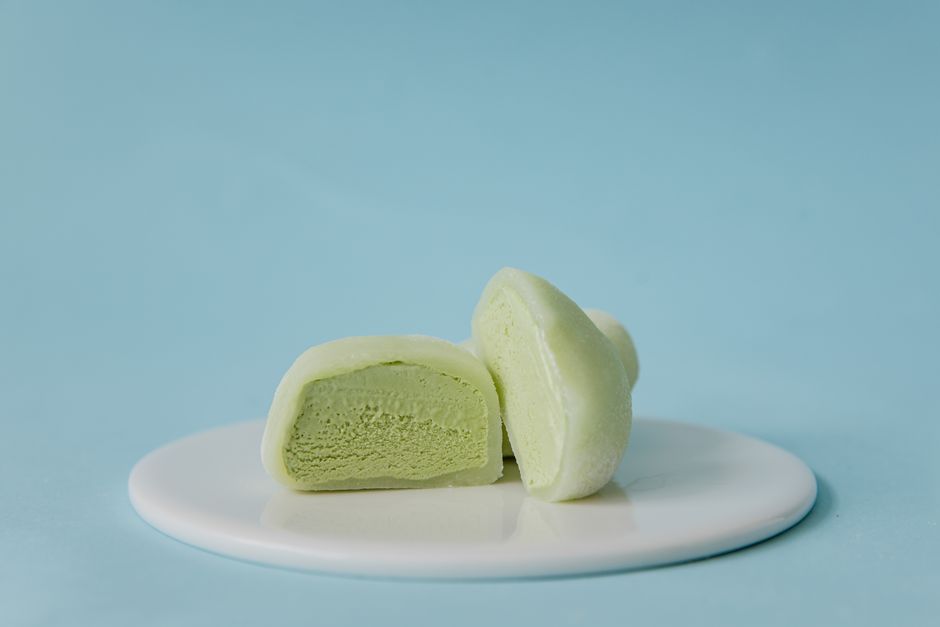
This textural supremacy allows mochi to function as an exceptional culinary chassis. The dough itself is a study in minimalism—a whisper of sweetness that never shouts over its guest ingredients. Its true genius lies in this neutrality, offering a perfect delivery system for potent flavors, whether the classic umami of red bean paste or the cold shock of an ice cream core. The texture, however, always remains the protagonist of the experience. This inherent adaptability has been the passport for its worldwide travels, enabling seamless integration into diverse food cultures. The recent boom in specialized vegan food delivery services, for instance, has showcased mochi's naturally plant-based casing as the ideal partner for novel, inventive fillings.
Investigator's Field Notes:
The key intelligence gathered from this investigation is unequivocal: texture is not an ancillary quality but a primary driver of gastronomic pleasure. For the chef or home experimentalist, this means that understanding how to engineer the molecular architecture of ingredients—from the deliberate pounding of starches to the intricate emulsification of fats or the controlled fermentation that builds the complex character of kimchi—is the secret to crafting unforgettable food.
Specific to Mochi: Its texture is a delicate assembly. The enemy is starch retrogradation, the scientific term for the hardening process. The primary countermeasure is an airtight container and rapid consumption. Should rigor set in, a brief burst of microwave energy (mere seconds) will re-excite the amylopectin matrix, reviving its signature, celebrated pliancy.